
Author name: saksham07trived@gmail.com

Uncategorized

Custom Flex Printing: Benefits, Uses, Applications & Complete Guide

In today’s competitive market, getting noticed is just as important as having a good product or service. Businesses need advertising materials that can communicate their message clearly, attract attention, and represent their brand professionally. This is where custom flex printing becomes a practical and affordable advertising solution. Whether you run a retail shop, restaurant, school, coaching institute, corporate office, event company, or local business, a professionally designed flex banner can help you communicate with customers in a highly visible way. Unlike standard banners with fixed designs, custom flex printing allows businesses to choose their own size, graphics, colors, text, photographs, branding elements, and finishing requirements. This makes it possible to create advertising material specifically for a particular campaign, location, or business requirement. What Is Custom Flex Printing? Custom flex printing is a large-format digital printing process in which personalized designs are printed on flexible PVC-based material. Businesses can create banners and advertising displays according to their specific requirements rather than using a standard template. A custom design may include a company logo, product photographs, promotional offers, contact information, social media details, brand colors, or other visual elements. The printing process generally begins with digital artwork. Once the design is finalized, it is printed onto the selected flex material using a large-format printer. The finished banner can then be trimmed, fitted with eyelets, stitched, mounted on a frame, or prepared for installation. This flexibility makes custom flex printing suitable for both temporary promotions and longer-term advertising applications. Link the phrase “flex printing services” to your main Flex Printing Services page. Why Choose Custom Flex Printing? One of the biggest advantages of custom flex printing is freedom of design. Businesses are not restricted to a fixed size, layout, or message. For example, a restaurant may require a large banner promoting a new menu, while a coaching institute may need an admission campaign banner. A retail store might need a colorful sale banner, whereas a company attending an exhibition may require a professional branded backdrop. Custom printing allows each of these businesses to create a design that matches its individual purpose. 1. Complete Design Flexibility With custom flex printing, you can choose the colors, images, fonts, dimensions, layout, and message used in your banner. This is especially useful for businesses that want their physical advertising to match their existing brand identity. 2. Affordable Large-Format Advertising Large advertising displays can sometimes become expensive when premium rigid materials are used. Flex provides a more economical option for businesses that need large visual displays. Because flex banners can be produced in different sizes, businesses can choose a solution that fits both their advertising space and budget. 3. Suitable for Different Businesses Custom flex banners are useful across many industries. Retail stores, restaurants, schools, hospitals, gyms, real-estate companies, event organizers, political campaigns, and corporate businesses can all use customized banners for communication and promotion. 4. Fast Production Digital printing technology allows customized designs to be produced without complicated traditional printing setups. This can make flex printing a practical choice when banners are needed for an upcoming event, promotion, or campaign. Common Uses of Custom Flex Printing The versatility of custom flex printing makes it suitable for many advertising and branding purposes. Shop and Store Advertising Retail businesses can use custom flex banners to promote discounts, new products, seasonal sales, and special offers. Large and colorful designs can help attract attention from people passing outside the store. Event and Exhibition Displays Events often require branded backgrounds, promotional banners, directional signs, and display graphics. Custom flex printing allows organizers to create these materials according to the event theme and available space. Corporate Branding Businesses can use customized flex displays for conferences, product launches, seminars, exhibitions, and corporate events. Company logos, brand colors, product information, and promotional messages can all be incorporated into the design. Outdoor Advertising Outdoor advertising is one of the most common applications of flex printing. Customized banners can be installed near roads, markets, commercial areas, construction sites, and other high-visibility locations. For outdoor applications, choosing appropriate material and printing specifications is important because banners may be exposed to sunlight, dust, wind, and rain. [EXTERNAL LINK OPPORTUNITY]Link “outdoor advertising” to a reliable industry or authoritative source explaining outdoor advertising or signage. Use an external source that genuinely adds information rather than a random directory. Educational Advertising Schools, colleges, coaching institutes, and training centers frequently use custom banners for admission announcements, examination notices, achievements, events, and promotional campaigns. Because the design can be customized, institutions can highlight important information while maintaining their visual identity. How Does Custom Flex Printing Work? The process of creating a customized flex banner involves several stages. Step 1: Understand the Requirement Before designing the banner, determine where it will be installed, how large it needs to be, what information it should communicate, and whether it will be used indoors or outdoors. Step 2: Create the Design A professional design is prepared using graphic design software. Important elements such as logos, photographs, headlines, contact information, and promotional messages are arranged according to the available space. Step 3: Select the Material The appropriate flex material is selected according to the application. Different materials can be suitable for front-lit displays, backlit signage, indoor applications, or outdoor advertising. Step 4: Print the Artwork The final artwork is transferred to a large-format printer. The printer produces the design directly onto the flex material using suitable digital inks. Step 5: Finishing After printing, the banner may be trimmed and finished with eyelets, stitching, welding, or other installation requirements. Step 6: Installation The completed banner can be mounted on a wall, frame, advertising structure, storefront, or other suitable surface. Custom Flex Printing vs Standard Flex Printing The main difference between standard and custom flex printing is the level of personalization. A standard banner may use a simple design or predefined information, while custom flex printing allows the business to control almost every visual element. Custom printing is particularly useful when the banner needs to communicate a specific marketing message

what is flex printing
Uncategorized

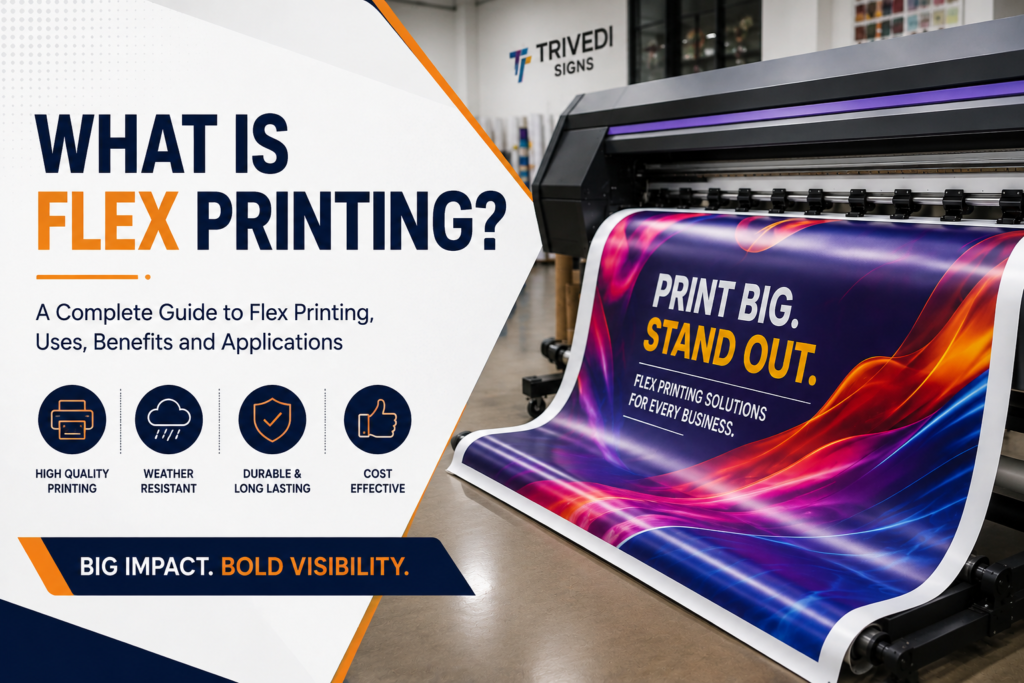
What Is Flex Printing? A Complete Guide to Flex Printing, Uses, Benefits and Applications

Flex printing is one of the most widely used printing solutions for outdoor advertising, business promotions, events, retail displays, and branding. From large shop boards and political banners to promotional hoardings and event backdrops, flex prints can be seen almost everywhere. But what is flex printing, and why has it become such a popular choice for businesses and advertisers? In simple terms, flex printing is a digital printing process in which designs, images, text, logos, and promotional content are printed onto a flexible PVC-based material called flex. The material is durable, lightweight, weather-resistant, and suitable for both indoor and outdoor applications. With modern digital printing technology, businesses can produce high-resolution and visually attractive banners in different sizes and designs. This makes flex printing an affordable and practical advertising solution for businesses of almost every size. What Is Flex Printing? What is flex printing? Flex printing is a large-format digital printing method used to print graphics, advertisements, photographs, text, and branding materials on flexible PVC sheets. A specialized large-format printer uses solvent, eco-solvent, UV, or other suitable inks to transfer the digital design onto the flex material. Once printed, the material can be cut, folded, mounted, or installed according to the requirements of the project. Flex printing is particularly popular because it allows businesses to create large advertisements without the high costs associated with many traditional advertising methods. For example, a local restaurant can use a printed flex banner to promote a new menu, while a retail store can use a large flex board to display discounts and offers. Companies can also use flex printing for branding, product launches, exhibitions, and corporate events. How Does Flex Printing Work? The flex printing process involves several important steps to ensure that the final product looks professional and remains durable. 1. Designing the Artwork The first step is creating the design using graphic design software. The artwork may contain company logos, photographs, promotional messages, contact information, product images, and other branding elements. The design should be prepared according to the required printing dimensions and resolution. Professional design is important because poor-quality artwork can result in blurry images and an unprofessional appearance. 2. Selecting the Flex Material Different types and qualities of flex materials are available for different applications. The appropriate material depends on factors such as location, required durability, printing quality, and budget. For outdoor advertising, businesses generally require a material that can withstand sunlight, wind, dust, and occasional rain. 3. Digital Printing The completed artwork is sent to a large-format digital printer. The printer applies ink directly onto the flex sheet according to the digital design. Modern printing machines can produce detailed graphics, vibrant colors, and high-quality images, making them suitable for professional advertising and branding. 4. Finishing and Installation After printing, the flex may be trimmed and finished according to its intended use. Eyelets, stitching, welding, or other finishing methods may be added to make installation easier. The final banner can then be installed on walls, frames, buildings, advertising structures, stalls, or other surfaces. for installment you can visit and contact to trivedisigns which have professional and skiled workers. Types of Flex Printing There are different types of flex materials and printing solutions available in the market. The right choice depends on where and how the printed material will be used. Frontlit Flex Printing Frontlit flex is one of the most common options for advertising banners. It is designed to be illuminated from the front and is widely used for shop signage, outdoor banners, and promotional displays. Backlit Flex Printing Backlit flex is designed to work with lighting placed behind the printed material. When illuminated, the graphics become highly visible and attractive. This type of printing is commonly used for illuminated signboards, advertising displays, malls, airports, retail stores, and other commercial spaces. Blockout Flex Printing Blockout flex is designed to prevent light from passing through the material. It is useful when businesses require strong, consistent colors and do not want background light to affect the printed design. Star Flex Printing Star flex is a commonly used economical option for outdoor banners and promotional advertising. It is often selected for temporary campaigns, events, and general-purpose signage where affordability is an important consideration. Common Applications of Flex Printing Flex printing has a wide range of applications across different industries. Outdoor Advertising Outdoor advertising is one of the biggest applications of flex printing. Businesses use large banners, hoardings, and promotional displays to attract the attention of people passing by. Flex banners can be installed near roads, markets, commercial buildings, and other high-traffic locations. Shop and Business Signboards Retail stores, restaurants, salons, gyms, educational institutes, and local businesses use flex printing for attractive and affordable signboards. A professionally designed signboard can improve brand visibility and help customers identify a business more easily. Event and Exhibition Branding Flex printing is frequently used for conferences, trade shows, exhibitions, weddings, college events, product launches, and corporate functions. Businesses can use printed backdrops, promotional banners, directional signs, and display graphics to create a consistent visual identity. Political and Campaign Advertising Large banners and posters are commonly used during political campaigns and public events. Flex printing allows large quantities of promotional material to be produced quickly and economically. Retail Promotions Retail businesses can use flex banners to promote discounts, seasonal offers, new products, and special sales. Because flex prints can be produced in different sizes, businesses can create everything from small promotional signs to large storefront displays. Educational and Institutional Advertising Schools, colleges, coaching institutes, and training centers frequently use flex banners for admission campaigns, announcements, events, achievements, and promotional activities. Benefits of Flex Printing There are several reasons why flex printing remains popular despite the growth of digital advertising. Cost-Effective Advertising Flex printing is generally an economical solution for large-format advertising. Businesses can produce highly visible promotional material without investing in expensive advertising infrastructure. High-Quality Printing Modern digital printers can produce sharp text, detailed graphics, and vibrant colors. This allows businesses to create professional-looking promotional materials. Customizable Sizes One

Uncategorized

Best Places to Visit in Norway: 15 Must-Visit Destinations for Every Traveler (2026 Guide)

Introduction Why Visit Norway? Spectacular Natural Beauty Adventure Activities Rich Culture & History Best Places to Visit in Norway 1. Oslo Top Attractions Best Things to Do Best Time to Visit 2. Bergen Why Visit Bergen? Top Attractions Travel Tips 3. Geirangerfjord Highlights Popular Activities 4. Tromsø Why It’s Famous Northern Lights Experience Winter Activities 5. Lofoten Islands Stunning Beaches Fishing Villages Hiking Opportunities 6. Flam Scenic Railway Fjord Cruises Outdoor Adventures 7. Preikestolen (Pulpit Rock) Hiking Guide Best Photography Spots Safety Tips 8. Stavanger Old Town Museums Food Scene 9. Alesund Art Nouveau Architecture Viewpoints Island Hopping 10. Svalbard Arctic Wildlife Polar Bears Glacier Tours 11. Trondheim Nidaros Cathedral Historical Attractions Local Culture 12. Hardangerfjord Fruit Orchards Waterfalls Scenic Drives 13. Senja Island Hidden Gem Hiking Trails Photography Locations 14. Nordkapp (North Cape) Midnight Sun Scenic Cliffs Visitor Center 15. Jotunheimen National Park Highest Mountains in Norway Trekking Routes Camping Information Best Time to Visit Norway Summer (June-August) Winter (December-March) Spring (April-May) Autumn (September-November) Things to Do in Norway Norway Travel Tips Currency Transportation Budget Planning Packing Essentials Safety Tips Suggested Norway Itineraries 5-Day Norway Itinerary 7-Day Norway Itinerary 10-Day Norway Itinerary Frequently Asked Questions (FAQ) What is the most beautiful place in Norway? How many days are enough for Norway? What is the best month to visit Norway? Is Norway expensive for tourists? Can you see the Northern Lights in Norway? Which Norwegian city should I visit first? Conclusion

Scroll to Top